

Libra Rewilded: 4 Totem Animals of the Cardinal Air Sign


Autumn Equinox blessings to all! Although I will certainly be behind in publishing this, as I sit down to begin writing it is the day of the Autumn Equinox itself here in the Northern Hemisphere - the day when, for the second time as we make our way around the Zodiac wheel, light and dark are in perfect balance. On this day every year the Sun ingresses into the tropical zodiac sign of Libra, traditionally represented by the symbol of the weighing scales.
This is the seventh article in the Rewilding the Zodiac series in which we will explore the history and mythology of the sign of Libra, and consider some of the animals which share in Libra’s ways of being and which we might thus carry with us internally as living Libran totems. I am aware as I set out upon this task that Libra may prove to be one of the most difficult signs to approach in this way, as we are already so familiar with this sign as being represented by the only mechanical symbol in the Zodiac.
However, this of course does not mean that the qualities of Libra cannot be embodied by members of the natural world. The sign of the scales represents an important turning point in the year and so still carries symbolism that resonates with the Earth’s natural cycles, and which we can therefore also connect with the flesh and blood beings who live upon her. Each animal being we explore here will bring forth its own Libran medicine in a unique way, as we shall shortly see. But first, let’s take a little detour into Libra as a sign, and explore some of its lesser known history to help us understand Libra’s place in the wheel.
Rewilding the Zodiac is an attempt not just to understand the stars by seeing them reflected in life upon the Earth, but to reconnect us with the Earth through our love of the stars. And somewhere along the way, I hope it can also reconnect us with a forgotten part of our own selves, too.
Libra: Holding up the First Mirror
After earthy Virgo Season beckons us to focus on getting ourselves and our metaphorical (or possibly literal!) house in some semblance of order, airy Libra Season arrives with a lightness of spirit that may feel much needed and well-earned. If we have devoted ourselves fully to the Virgoan work of purifying and perfecting, we are now ready to enter into relationship with ‘other’.
That is to say: this is the first time in the Zodiac wheel when we find ourselves opposite a sign which we have already visited. The astrological year begins with Aries at the Spring Equinox - a sign which is very much associated with new beginnings and a sense of selfhood. Now that we have reached Libra, we have reached the halfway point, and we find ourselves sitting directly across the wheel from Aries. Suddenly, we become aware that no self exists in isolation. In this way, Libra - ruled of course by Venus, the goddess of love and beauty - holds up the first mirror and brings us into an experience of relationship.
Although in many ways opposites, Aries and Libra mirror each other. Both cardinal signs, they sit at two of the four important turning points of the seasonal and agricultural year - Aries at the Spring Equinox, and Libra at the Autumn. Both Equinoxes represent moments of balance, when the time of light and dark are equal in length. But while Aries is equated with new life bursting from the soil and the growing power of the Sun, Libra reminds us that the life that bloomed in Spring must fade with Autumn, and that the light of the Sun must now give way to the darkness. Light and dark cannot exist without each other, just as life cannot exist without death, and the concept of self cannot be completely understood without the mirror of the other.
As the cardinal air sign, Libra initiates us into these understandings through the power of the mind. Associated with balance, justice and harmony, Venus-ruled Libra seeks the ideal, and it does this through mediation, cooperation and diplomacy. The heated passion and impulsiveness of Aries is thus counterbalanced in Libra’s cool-headed thoughtfulness. At their finest, Libran folks are sociable, open-minded, fair, accommodating and respectful individuals, but an excess of Libra medicine can result in indecisiveness, vanity or avoidance of difficult situations.
We can see that the weighing scales is undoubtedly well-chosen in representing Libra’s values and its place in the wheel at the time of the Autumn Equinox, but we may also be intrigued by Libra’s status in the Zodiac as the only inanimate object. This becomes especially curious when we recall that the word zodiac can be traced back to the Greek phrase zōidiakós kýklos, which essentially means “circle of little animals”. So how did a set of scales end up being part of the Zodiac wheel as we know it today?
As it turns out, Libra is actually the youngest constellation in the wheel, and does not appear to have originally been a part of the Zodiac as it was conceived of by the Ancient Greeks. The stars that now make up Libra were considered to be the claws of Libra’s neighbouring sign, Scorpius the scorpion, and so this explains the above conundrum. The names of Libra’s two brightest stars, Zubeneschamali and Zubenelgenubi, hark back to this, translating from Arabic as ‘northern claws’ and ‘southern claws’ respectively. It is believed to have been the Romans who formalised Libra as a separate constellation in approximately the first century BCE; Libra means ‘weighing scales’ in Latin, and the values attributed to Libra - justice, democracy and balance - are those that were integral to the advancement of Roman society. The scales themselves are those of Astraea, the Greek goddess of justice who is the personification of Virgo, Libra’s other neighbouring sign. However, it it interesting to note that in earlier Babylonian culture, Libra was known as MUL Zibanu, also meaning ‘scales’ or ‘balance’, with the scales being sacred to Shamash, the sun god who was patron of truth and justice. It is therefore possible (if not likely) that the Romans adopted this concept when they designated Libra as a constellation in its own right. Furthermore, the ancient Sumerians called the constellation Zib-ba An-na, meaning ‘balance of heaven’, which bears striking similarity to both the aforementioned Arabic and Babylonian names meaning both ‘claws of the scorpion’ and ‘scales’. This linguistic resemblance may have thus also contributed to Libra’s evolution from claws to weighing scales.
Totem Animals of Libra
The Dove

As we found when we rewilded Venus’ other sign, Taurus, the Roman goddess of love was not depicted with sacred animals in artistic renditions anywhere near as frequently as her Greek counterpart Aphrodite. So once again, we will turn to the latter in our search for Libran animals, and one creature in particular immediately stands out above the rest: the dove!
Doves have a long history as a worldwide symbol of peace and love, and this probably derives from observation of their natural behaviour. Many species of dove form strong life-long pair bonds, and share equally in the tasks of nest building, egg sitting and raising their young after they hatch. In this way, they represent balance and compromise, as well as partnership and devotion, and it is not hard to see why they were held sacred to the Greek goddess who presided over love, beauty and procreation (in relation to the latter, some species of dove and pigeon raise up to four broods a year, breeding all year round!). The dove’s symbolism was significant enough to endure into later Christian iconography, and although it is now recognised as a controversial practice, doves or white pigeons are sometimes still released as symbols of love and fidelity during modern day marriage ceremonies. The white colour of these birds is especially important, being evocative of purity and harmony, both important Libran themes.
It is suggested that the importance of doves to Aphrodite may have been absorbed into her mythology through her association with Inanna-Ishtar, the Mesopotamian goddess of love, sexuality and war, for whom doves were also a prominent symbol. Interestingly, in some regions of Ancient Greece, Aphrodite was also associated with war as well as love, but despite this it is often suggested that the dove’s gentle and placid nature was reflective of Aphrodite’s own character; and once again we are faced with the reality that in order for us to have a concept of peace, we must also acknowledge its opposite: conflict.
Doves and their pigeon relatives have been commonly used as messenger birds, and this also speaks to us of the importance of communication in mediating conflict and resolving disagreement. Mutual understanding and subsequent respect can only be achieved through acknowledging the opposite perspective and making a genuine effort to appreciate where it is coming from, and at its best Libra excels at suspending judgement and finding the balance between opposing forces.
The Dolphin

The second of Aphrodite’s sacred animals who we might consider as a totem of Libra is the dolphin. Generally speaking, marine creatures can be considered as falling under Aphrodite’s domain due to her own origin story - which, in typical Ancient Greek fashion, is somewhat gruesome. As Hesiod tells the myth, Aphrodite rose from the sea foam produced when the Titan Kronos (Roman Saturn) castrated his hateful father Ouranos (Uranus) in a bid to overthrow him and cast his severed genitals into the sea. Her name is thus said to mean ‘arisen from the foam’.
Dolphins live in close-knit family groups and communicate with a rich and varied repertoire of vocal sounds. They form extremely close bonds, and possess mental capabilities which can easily be compared to those of humans. As a group, they seem to find great joy in surfing the waves, and are commonly seen as representative of playfulness as well as affection. These traits are reflective of the values of love, harmony and pleasure which are associated with Aphrodite, and explains why Aphrodite is frequently depicted alongside dolphins in Greek art.
We as humans find something unusually enamouring about watching a group of dolphins swim and play, so much so that we will pay good money to go dolphin-watching in hopes that we will be fortunate enough to experience this moving encounter first hand. The grace and beauty of the dolphin is evocative of Aphrodite’s own divine grace and beauty; it touches something within us and goes some way to fulfilling our own Libran search for something that feels harmonious and pure. Just as watching the trees turn red and gold at this time of the Autumn Equinox fills us with a sense of appreciation for nature’s beauty, so does the sight of the joyous dolphin and her kin.
The dolphin also represents the Libran quest for balance and rhythm, for although they are creatures of the sea, they are mammals and must breathe air to survive. As they play, they break the surface of the water, leaping and spinning, breathing in before plunging back beneath the waves. As a totem of Libra they show us the importance of maintaining the balance of above and below, for it is inherent to their lives - inhaling and exhaling, taking and giving, listening and speaking.
The Swan

Our next Libran totem is another white bird, the swan. The swan is also sacred to Aphrodite, and in Greek art Aphrodite is often shown riding in a chariot pulled by white swans. The swan shares the dove’s radiant white plumage and the dolphin’s graceful elegance, mirroring Aphrodite’s divine beauty, and like the dove, the swan also mates for life and is commonly seen as a symbol of romance, commitment and devotion.
If you have ever watched a swan gliding across the surface of a lake, the water barely seeming to ripple as they float by, you will surely have been struck by their dignified refinement and seemingly effortless poise. They appear to be at perfect harmony with their environment, unflustered and unhurried. In this sense, they represent Libra’s often cool, measured and rational approach to life.
It is here that I would like to share with you a personal anecdote. When I worked as a veterinary receptionist many years ago, I had a very lovely manager who used to say that her team were like “graceful swans” - cool and collected as far as anyone else was concerned, even when we were frantically paddling to stay afloat beneath the surface! As I think about it now, that role required us to be exceptionally Libran in many ways, obscuring our own personal feelings and the often not-insignificant stress we experienced beneath the surface, so that outwardly we were able to serve the needs of another with grace and professionalism.
This calm facade means that Libra does not often rise in impulsive anger - this is more the domain of its opposite, Aries. Libra would rather discuss the issue with an impartial mind and find a suitable compromise, and may even quietly put their own thoughts, feelings and wishes to one side in order to accommodate the perspective of the other. But that said, as we have seen already with the dolphin, in an ideal world a balance must be maintained and sometimes even the most diplomatic of Libras may need to stand up for themselves rather than bending always to the will of others. The swan can aid us in maintaining this particular balance, for although they are generally very sociable and peaceful animals, during the Spring breeding season males will defend their territory with surprising fervour. This reminds us that the ideals of love and beauty can also go hand in hand with more heated feelings of passion and desire, and we can use this medicine with mindful intent, choosing when we think it is appropriate to speak up and put ourselves first.
As the goddesses who preside over beauty, Aphrodite and Venus are often also associated with the arts; Venus in our chart can reveal much about our appreciation of beauty and what we find value in. In Libra, beauty is sought through concepts and ideals. What makes the swan a particularly lovely Libran totem in this respect is that, to the Ancient Greeks, it was the bird of the Muses. The Muses were the goddesses of music, song and dance, and the swan itself was a symbol of music, to which the concept of ‘harmonics’ is of course integral (although sadly I don’t have the capacity to explore that particular Pandora’s box here!). Socrates wrote that swans sing their sweetest song just before their death, thus giving us the phrase ‘swan song’ to refer to one’s final, remarkable performance. It feels poignant in light of this to remember Libra’s place at the turning of the year, as nature gives us one last flourish of beauty in the form of Autumn colours before she retires into sleep until Spring.
The Ostrich
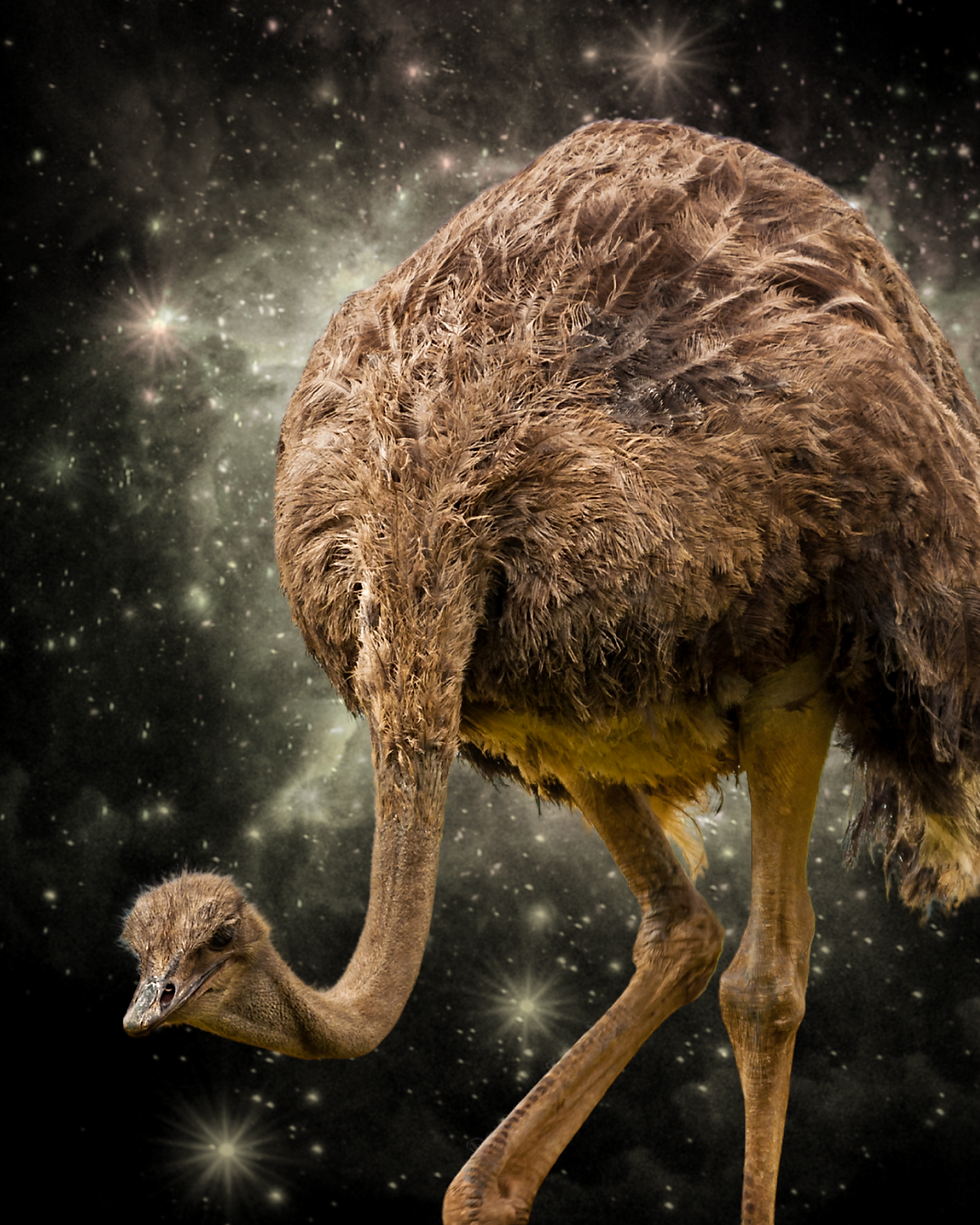
The final animal I would like to suggest here as a totem of the air sign Libra is, perhaps unsurprisingly, another bird - although admittedly, this one is too big to fly! It is the ostrich.
The ostrich is not one of Aphrodite’s sacred creatures, but rather this large land-bound avian can be connected to Libra through another cultural Libran myth altogether. As we well know, the traditional symbol of Libra is not a living being but rather a set of scales, symbolic of balance and justice. The root of the name Libra (reminder that this means ‘scales’ in Latin) derives from the name of a Libyan goddess of justice who bore the scales of judgement, and in Egypt, this is the goddess Ma’at. Ma’at was the goddess of truth, justice and cosmic balance, and it was upon her weighing scales in the Hall of Judgement that a person’s heart would be weighed after death to determine whether they would be allowed to enter the Afterlife. The heart, representing the person’s conscience and moral character, would be placed on one side of the scales, and upon the opposite side lay the feather of Ma’at - an ostrich feather. If the heart was heavier than the feather, the soul’s journey was at an end, for it had not passed the test; however, if the heart balanced with the feather, then the soul was revealed to have lived a good life, and could pass onward to eternal paradise.
The ostrich feather itself is Ma’at’s primary symbol, and there is some suggestion that it may have been so because it is more or less symmetrical - unlike most other bird feathers - and thus represented the balance and order that Ma’at presided over. Although I have also heard it said that it was chosen because it was the largest feather, thus the heaviest, and so improved one’s chances of entering the Afterlife!
As well as its symbolic connection with justice and morality, the ostrich can also bring us into awareness of one of Libra’s shadows which we touched on with the swan, and that is the shadow of avoidance. The ostrich is perhaps most famous for burying its head when it senses a threat, under the mistaken impression that if they cannot see the threat, the threat cannot see them. This is actually a myth, for ostriches do not actually do this - although it may have arisen because they use their beaks to dig their nests and search for food in the earth, which can make it look like their head is underground from certain angles. However, it is a myth that has persisted despite its lack of truth, and seems to have cemented itself as a part of the ostrich’s archetype. It is certainly relevant in this context, for in their desire for harmony Libra may sometimes avoid confronting difficult situations, glossing over tensions or withholding the truth of their thoughts in order to keep the peace; this may take the form of “If I don’t tell you I disagree with you, then we can’t argue about it”, or “If I don’t tell you that your idea isn’t a good one, then I won’t upset you”. But doing this in itself can sometimes upset the order of things, for it is rarely a long term solution, and can eventually breed resentment on both sides; the Libran native may feel unable to express themselves, whilst the other might interpret the Libra’s impartiality as disinterest.
That said, it is interesting that some goddesses of justice - I am thinking here particularly of the Greek Themis and her Roman counterpart Justitia - are often depicted blindfolded. The idea here is that without the power of sight one cannot be swayed, seduced or distracted by outward appearances, and thus we must look within to reveal the truth of a thing. The crucial aspect of the scales as the Zodiac’s only inanimate object is that this makes them truly impartial in their judgement. But there is of course a fine line between true impartiality, in which we are able to relinquish our need to be right and can position ourselves in between our own viewpoint and that of another person, and avoiding an issue, wherein we metaphorically ‘stick our head in the sand’ and pretend the conflict does not exist.
Final Thoughts
Although there is clearly an important lesson to be learned from the scales themselves as Libra’s traditional image, this sign can be represented by members of the living world as well as any other Zodiac sign. As always with these Rewilding the Zodiac articles, which animal feels most appropriate may ultimately come down to personal preference, or you may like to work with different animals to connect with different aspects of Libra.
The dove and the swan both represent devotion and partnership, and their white plumage brings to mind thoughts of purity and divine beauty. The dove as a messenger bird reminds us of the importance of communication in any relationship, while the swan’s protectiveness of its offspring can give us permission to stand our ground and speak up when something is important to us. The dolphin also speaks to us of beauty, as well as of Libra’s social and pleasure-seeking sides, and demonstrates balance as it plays in the ocean waves, leaping above and below, breathing in and out. Our final animal, the ostrich, stands somewhat apart from the rest as an ancient symbol of justice and order, and as a spiritual ally can help us to be aware of the important distinction between suspending judgement or avoiding it altogether.
There is also something else importantly Libran which this consideration of animal totems reminds me of. This is a lesson taught by the natural world in general, and it is that balance cannot be a permanent state. Living things change, just like the seasons, and we ourselves change our minds as we grow and learn. Achieving balance is thus not a final goal to aim for, but something that must be maintained; the scales will inevitably shift, and we must be aware enough to shift with them. Finding the balance between two contrasting perspectives does not negate either one, as the two sides still exist independently of each other, and as we mentioned earlier on, opposites cannot exist in isolation. One of the best examples of this, once again, is that light cannot exist without dark, and we are reminded of this as the metaphorical scales now shift us towards the dark half of the year, when many animals retreat into hibernation and the plants retreat into the earth. The Libran ideal of beauty is also made more potent by its impermanence, and the preciousness of life is made more so because we know it must eventually pass into death.
This brings us to the close of this journey into Libra Rewilded, and as always, I hope it has been both interesting and thought provoking. I’m grateful to you for reading, and if you’ve enjoyed it please do consider consider subscribing to my newsletter or my Substack, sharing your thoughts in the comments, or sharing the article with someone else who you think might enjoy it. This blog is still very small, but I hope in time it may grow into a valued resource for those who love the stars and the Earth in equal measure.
With love and magic,
Merry x


Comments